Holmen logotype Holmen logotype

Where the journey from forest to raw material begins

Holmen’s business depends on thriving forests and healthy ecosystems. We want to make the most of the forest’s valuable raw material and produce as much sawn timber as possible, while safeguarding natural values and creating good conditions for the next generation of forest. But what actually happens before harvesting can begin?

The harvest area planner’s meticulous preparatory work

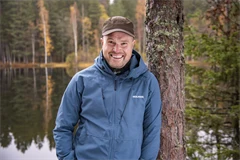
For forest planner Johanna Norberg, the job involves everything from analysing digital maps to encountering ancient remains, rare plants and birds of prey in the forest. Every day, she makes decisions and balances different interests that affect both today’s operations and the forests of the future.
 
“Forest planners prepare and plan harvesting operations before the forestry machines arrive on site. I identify and mark areas that need to be protected, plan how the machines can move through the terrain and make sure that appropriate consideration is given to natural and cultural environments,” she says.

The work usually begins at a computer. Using digital map layers, Johanna analyses the terrain, ground conditions, cultural heritage sites and known natural values before heading out into the field.
 
“The information in the maps gives me a good idea of what I can expect to find in the forest. I also know which areas I need to examine more closely and where we probably shouldn’t drive.”


“We need to understand both the ecological and economic values of a site. Only then can we make the right decisions for both today’s forests and those of the future.”


Johanna Norberg, forest planner Holmen Forest

Maps reveal a lot, but not everything

Digital tools have fundamentally changed forest planning. Where paper maps were once the norm, forest planners now use GPS-enabled systems that allow them to document areas requiring special consideration and important observations directly in the field.
 
But technology is no substitute for being there.
 
“You have to see what is actually out there. That’s incredibly important.”


Once Johanna is in the forest, much of her work involves confirming what she has already identified on the maps, but also discovering things that cannot be detected beforehand.
 
It might be a particularly valuable habitat tree, a protected plant, a bird of prey’s nest or traces of the lives and activities of previous generations.
 
“I change something in the plan almost every day. Something unexpected always turns up.”


When history is hidden in the forest

Some of the most memorable discoveries involve cultural heritage. In her work, Johanna regularly comes across remains that have not necessarily been registered before, such as old cairns, building foundations and archaeological remains.
 
“One of my colleagues has even found ancient graves. You never know what you’re going to come across, and that’s really exciting.”
 
When previously unknown cultural heritage features are discovered, the plan needs to be adapted. If a potential archaeological find is identified, Holmen consults the County Administrative Board to ensure that the area is handled appropriately. The site is then clearly marked so that machine operators know where special care is required.


Balancing natural values and raw material

At its core, forest planning is about balancing different interests. The same site may contain natural values that need to be preserved, cultural environments that require protection and water environments that need special consideration, while there is also a need to harvest raw material efficiently.
 
“The decisions we make affect what is actually left in the environment after harvesting and how much timber we can extract. Our decisions have both economic and ecological impacts.”
 
Natural values can range from an individual lichen or plant to larger environments such as wetlands, lakes and buffer zones alongside water.


“It’s about both the big picture and the small details. I always try to balance our actions so that we focus them in the right places, where they will have the greatest benefit.”
 
In some cases, the work also involves actively enhancing natural values. This might mean creating conditions for species that benefit from fire-influenced forests or releasing older deciduous trees from surrounding competition to give them better conditions to develop.


Sharing expertise across the organisation

Although forest planners often work alone in the forest, the decisions they make are part of a broader team effort. Holmen has established a structure that allows questions relating to natural values to be escalated to colleagues with specialist expertise. If a site contains high natural values or involves particularly complex considerations, several levels of support are available.
 
“If I’m unsure, the answer is only a phone call away. There are around 50 forest planners at Holmen, and we help each other.”
 
Johanna also works part-time as a nature conservation coordinator and is part of Holmen’s escalation process, which is used when additional expertise is required.
 

“We have come a long way at Holmen in identifying natural values and recognising environments that require additional consideration. We have good tools, extensive expertise and specialists to turn to when needed.”
For Johanna, forest planning is ultimately about creating the conditions for managing forests over the long term. By identifying natural values, adapting measures to the conditions of each site and at the same time planning for the efficient harvesting of raw material, forest planners help preserve important environments while enabling the forest to continue supplying timber for future generations of wood products.
 
“There is close cooperation between us forest planners, timber buyers, harvesting managers, silviculture teams and many others. Our job is to deliver on the assignment, make the necessary assessments in relation to the Swedish Forestry Act, industry-wide guidelines and certification requirements, and make the work easier for the machine operators so that the customer’s objectives can be achieved.”


Forestry in a changing climate

In recent years, climate change has become an increasingly important factor in forest planning. Shorter winters, longer periods of drought, heavy rainfall and more frequent storms affect both the forests themselves and the conditions in which forestry operations are carried out.
 
“There’s no denying that we are seeing more extreme weather. We need to adapt and make sure we are in the right place at the right time to minimise risks and avoid damage to soil and water.”
 
For a forest planner, this means thinking about the short and long term at the same time. Which tree species are best suited to the site? How might the area be affected by a changing climate? Which values need to remain for future generations?
 
“You think both backwards and forwards in time. What did the forest look like in the past? What will it look like after the operation, in ten years or in 150 years?”

A job that helps shape the forests of the future

For Johanna, the long-term perspective is always present.
 
“The responsibility for the next generation of forest is always there. What needs to be preserved? What needs to develop? What decisions are we making today that will affect the future?”
 
She also hopes that more people will gain a better understanding of just how much work takes place before harvesting can begin.
 
“I wish more people knew how much planning, knowledge and careful consideration goes into it. It doesn’t just happen.”


Find out more about WOOD Talks

Landing page for WOOD Talks

Jan Åhlund Holmen vid sjö i skog

Forestry and wood construction

Lantbruksbyggnad med trästomme

Moisture and wood construction

Karin Sandberg, RISE

Reuse and wood construction

Exteriör Kvarteret Frigg

New Heights for Housing

About the website

  • Cookies
  • Change your cookie settings
  • Personal data (GDPR)


Holmen logotype

Holmen Wood Products makes high-quality wood products for the joinery and construction industry, and directly for builders’ merchants and wood product importers. The raw material comes from our own slow-growing, responsibly managed forests and is turned into sustainable building material in our five chain-of-custody certified sawmills. Because we are in control of our raw material, the logistics chain from forest to saw, and the entire production process, we can guarantee that we are a stable and reliable supplier. 

Holmen Wood Products is a part of the Holmen Group.

Modern Slavery Act Transparency Statement 

Holmen Group websites

  • Holmen Group - holmen.com
  • Forest - holmen.com/forest
  • Renewable energy - holmen.com/energy
  • Board and Paper - holmen.com/boardandpaper
  • Wood Products - holmen.com/woodproducts

More about the Holmen Group

  • About Holmen
  • Career
  • Sustainability
  • Investors
  • Newsroom

© Holmen 2026

Back to top