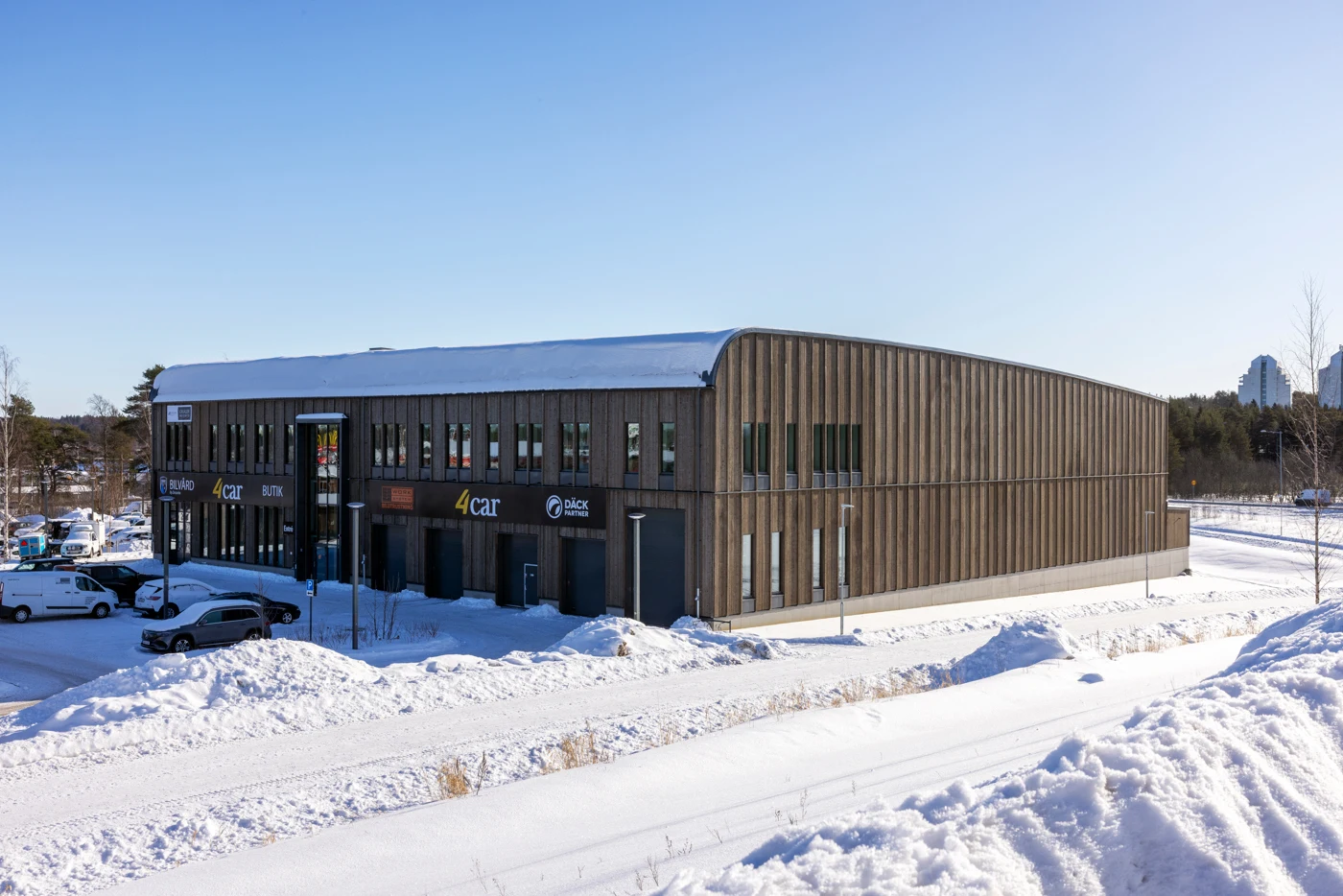
The GreenZone project was a clear statement of intent from the outset. The retail park, which brings together a variety of businesses including a car dealership, a vehicle inspection workshop and a fuel station, was presented as proof that it was possible to build differently. A development from the early 2000s, it put sustainability front and centre, employing innovative solutions for energy, resources and biodiversity, with wooden buildings carefully designed to revitalise both people and the environment.
Meeting today’s challenges
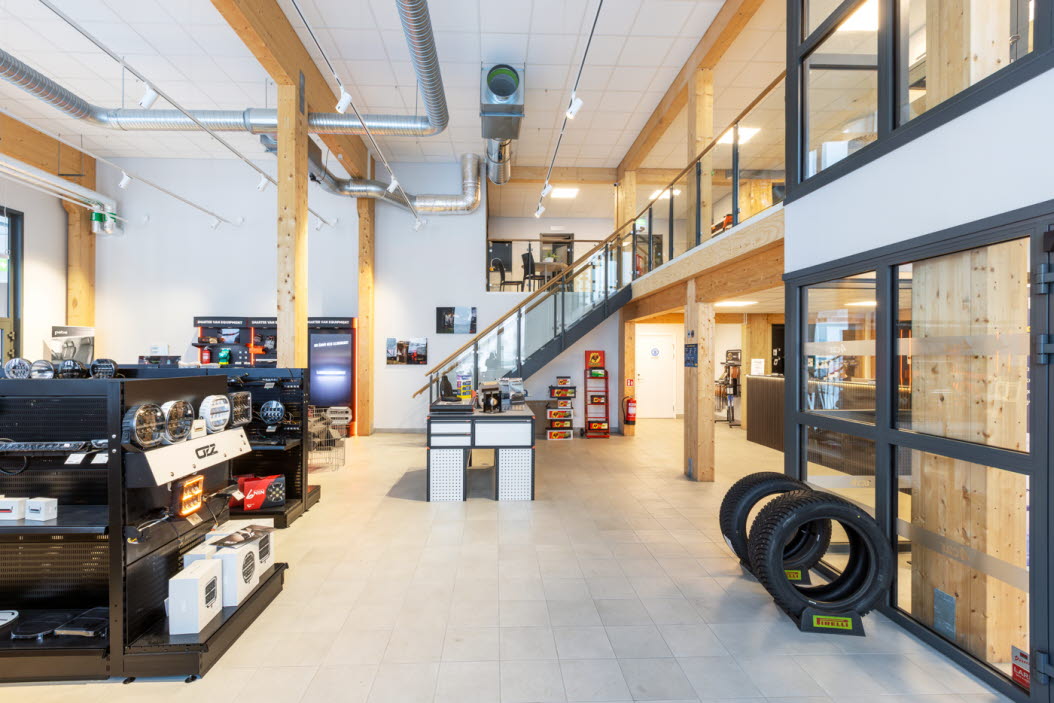
The current GreenZone 2.0 initiative has taken the site to the next level, embracing a wide range of modern system solutions adapted to the challenges of today. The demand for renewable electricity and sufficient power is met, in part, through integrated electricity solutions that reduce the load on the power grid, as well as smart examples of energy management, with a microgrid, battery storage and photovoltaics. Several new commercial buildings in wood have also been added.
“Given that GreenZone is an explicit commitment to sustainability, a pure environmental project to inspire more climate-smart thinking, no material beats wood. Wood is our only renewable building material and we know that choosing to build in wood reduces carbon emissions. There was never any debate about other building materials for GreenZone,” says entrepreneur Per Carstedt, who initiated the whole project.
Look at the total cost
While sustainability permeates everything GreenZone stands for, the site is also run with a clear focus on commercial value. Over the years, more than 10 000 people have been on study visits, many of them curious, some more sceptical. Is it really economically viable? What do the costings look like when building in wood?
“Builders, investors and policy-makers all get the same answer from me. To my mind, the numbers make perfect sense if you factor in the incredible value that wooden buildings add. You have to consider not just the material but the total cost. On top of the measurable climate benefit, you get cleaner and faster installation, for example. But the greatest added value of all relates to well-being. We have a lot of people in our buildings, we run a number of different businesses and as an employer we care about our staff. People feel much better in a wooden building, which is worth a lot to me,” says Per.
Marginal difference in the quotes
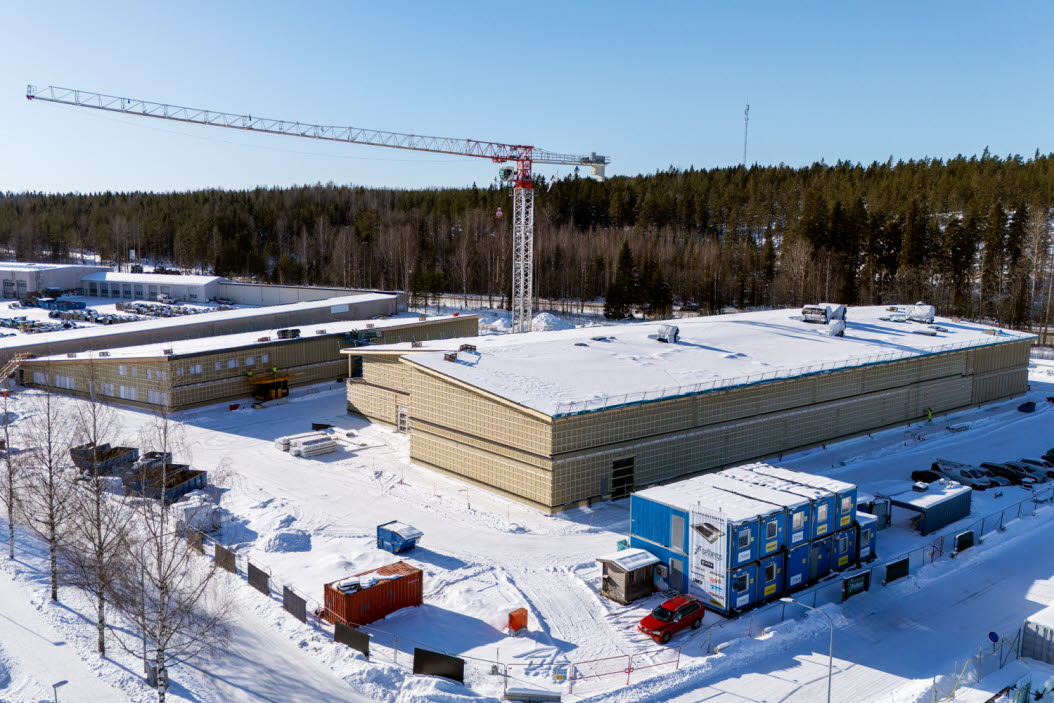
The Carstedt family rarely rests and in the automotive industry there is always something to do. Like taking on the challenge of building the most modern vehicle repair centre in northern Europe − a 7 800 square metre industrial building, equipped and fitted out to the highest standards. The ambition was to build in an environmentally friendly way, but unlike GreenZone, the vehicle repair centre is not a pure sustainability project, which is why the conditions for the construction contract were different.
While the project was intended to involve building in wood, seven construction companies were invited to present a significantly cheaper solution, perhaps using other materials. Most of them still came back with quotes for an all-wood building. It turned out that substituting the materials made no significant difference to the bottom line, explains Per.
“The differences between the various solutions were marginal. Although everyone was allowed to replace wood as the load-bearing material, the pay-off was never enough to justify the change. I feel that proves my point quite clearly,” says Per.
Choosing wood every day of the week
The contract to build the vehicle repair centre was awarded to Selbergs Entreprenad in Umeå, the same company that was involved in the GreenZone development. John Johansson, project manager at Selbergs, says that the total cost should be weighed against the smooth project planning that comes with wood, and is very pleased to see Carstedts choosing another wooden design.
“We really like working with wood, and given the choice, we would probably do it all the time. However, this is not an entirely fair price comparison given the design and timeframe."
"Although posts and beams are similarly priced, a hybrid frame might have been an option here, if you’re just looking at the money. But there are other values to take into account. It feels great to be able to continue building in wood. Assembly is quick, and it’s a clean, pleasant environment, which keeps the carpenters happy. Wood gives the building a lovely feel, and the renewability factor is also a clear advantage,” says John.
State-of-the-art in wood
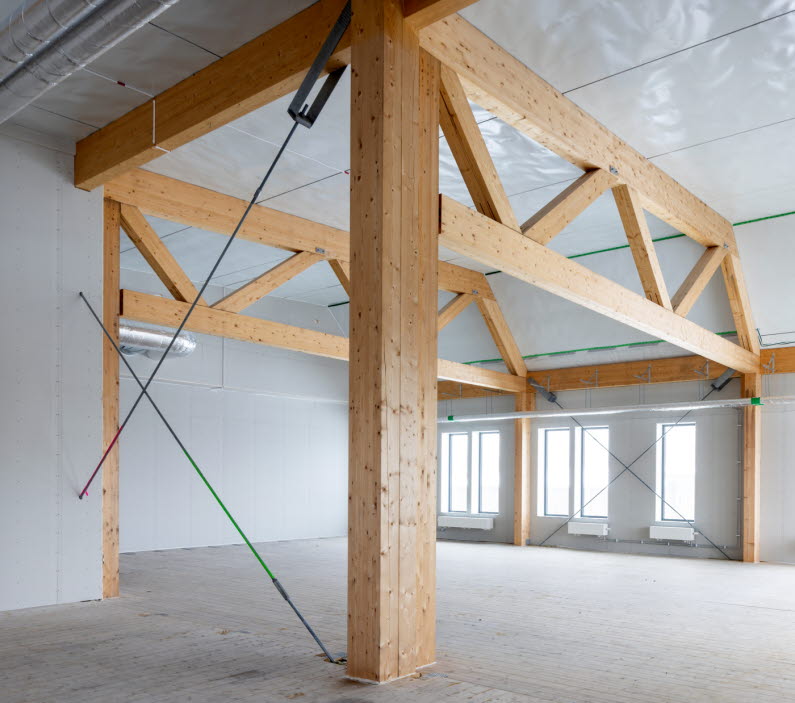
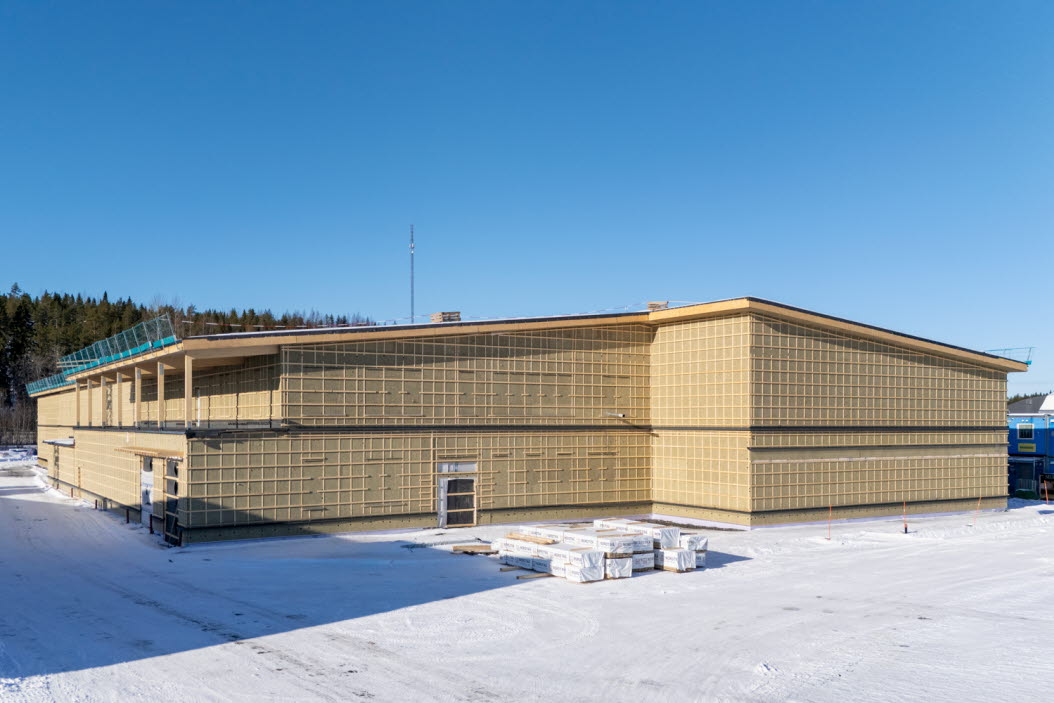
A state-of-the-art vehicle repair centre made entirely of wood is taking shape outside Umeå. Production started in May and work is expected to be completed by the end of 2026. The design uses wooden posts and beams, a CLT floor system, and external walls with a timber frame and cladding, supplied by Martinsons.
“We couldn’t be happier with the project so far. The schedule is on track, with speedy assembly, and I know the builders love being here. Just like everyone working in the building will. I might have mentioned how much wooden buildings improve well-being,” Per smiles.