

At the time, Holmen was planning to start exporting glulam to Japan but had not yet decided on the transport solution. Three potential logistics flows were identified, which Lovisa compared in terms of both cost and climate impact.
By analysing different transport alternatives using established methods for calculating emissions, the thesis showed that rail transport generates significantly lower emissions than road transport. The logistics flows combining rail and sea transport resulted in approximately 28 per cent* lower emissions than the alternative involving more extensive road transport.
The solution with the lowest climate impact involved transporting the goods by truck to the rail terminal in Bastuträsk, where they are loaded into containers for onward transport by rail to Gothenburg and then by sea to various markets, including Japan.
Today, this solution is used for sawn timber. When the Bastuträsk terminal became operational, it created new opportunities to combine rail and sea transport, and the logistics flow is now used for exports of wood products to all container markets.
“Lovisa’s analysis provided us with valuable input when choosing a transport solution. The combination of rail and sea transport resulted in significantly lower emissions without any substantial increase in transport costs. At the same time, the establishment of the Bastuträsk terminal has created new opportunities for both us and other companies in the region. Lower emissions from logistics also improve the climate performance of our products, which is becoming increasingly important to our customers,” says Niklas Wiggh, Product Manager at Holmen Wood Products.
According to Niklas, the thesis also provided valuable support in discussions on how future transport solutions should be designed.
“The cheapest transport option is not always the best business decision in the long term. The carbon footprint is becoming increasingly important to our customers, which is why we need to consider both cost and emissions when choosing transport solutions.”
For Lovisa, it is particularly rewarding to see that her work has had a practical impact on the business.
“My thesis became part of the decision-making process for choosing a solution with lower emissions. It is really rewarding to see that the work has actually been put to use,” she says.
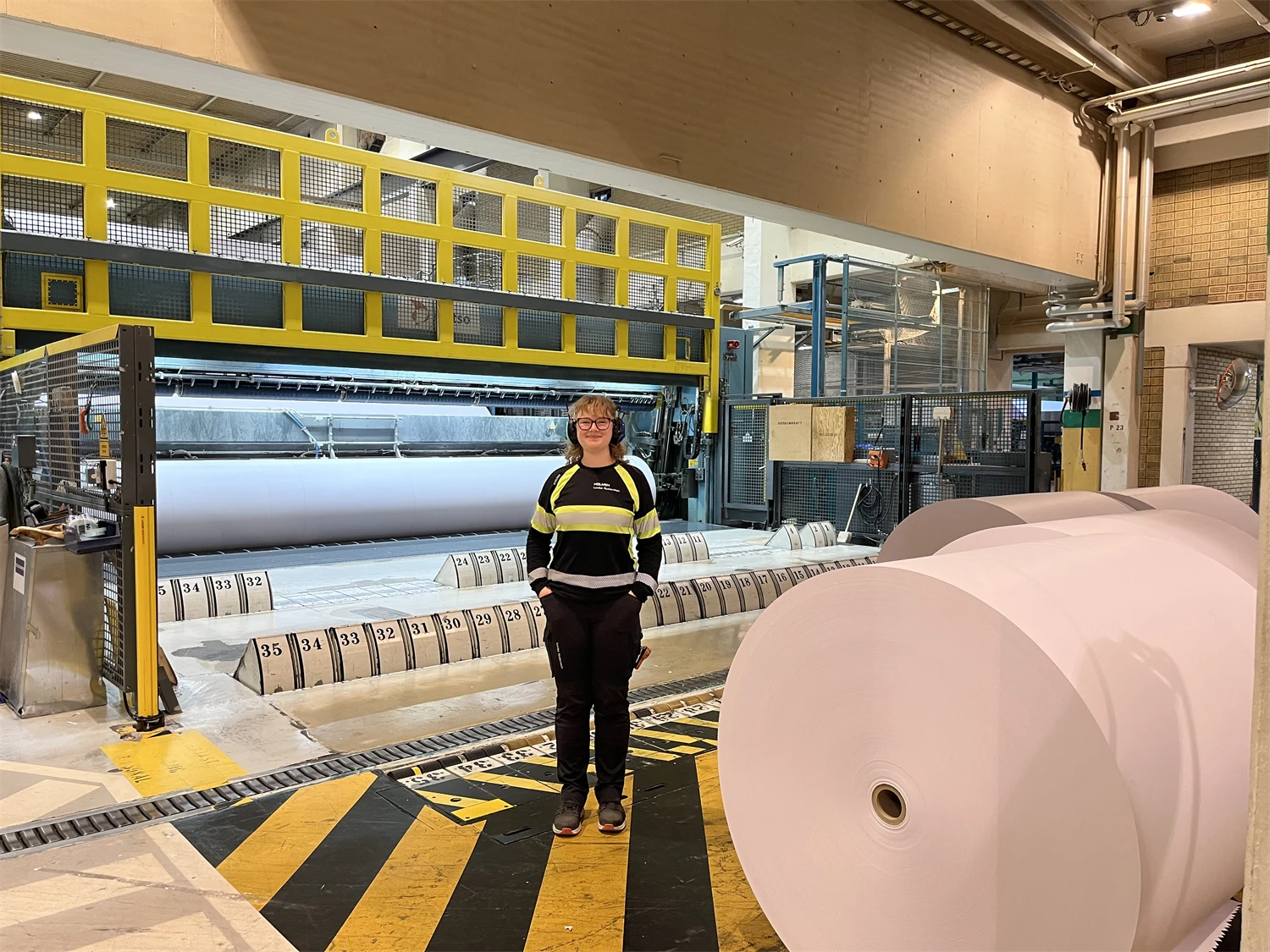
The thesis project also marked the beginning of Lovisa’s career at Holmen. Her positive experience during her time in Bygdsiljum later encouraged her to apply for a position within the Group. Since December 2023, she has worked as a Maintenance Engineer for one of the paper machines in Hallstavik.
“Everyone I met was very helpful and wanted me to succeed. It gave me a very positive impression of Holmen and contributed to my decision to apply for a job here,” says Lovisa.
Facts: Climate impact by logistics flow
| Logistics flow | Mode of transport | Climate impact |
| 1 | Truck, longest road distance; sea | 91.94 kg CO₂e/m³ |
| 2 | Truck, second-longest road distance; rail; sea | 66.20 kg CO₂e/m³ |
| 3 | Truck, shortest road distance; rail; sea | 65.99 kg CO₂e/m³ |
*The difference between 91.94 kg CO₂e/m³ and 66.20–65.99 kg CO₂e/m³ corresponds to approximately 28 per cent lower emissions per cubic metre of transported timber.