

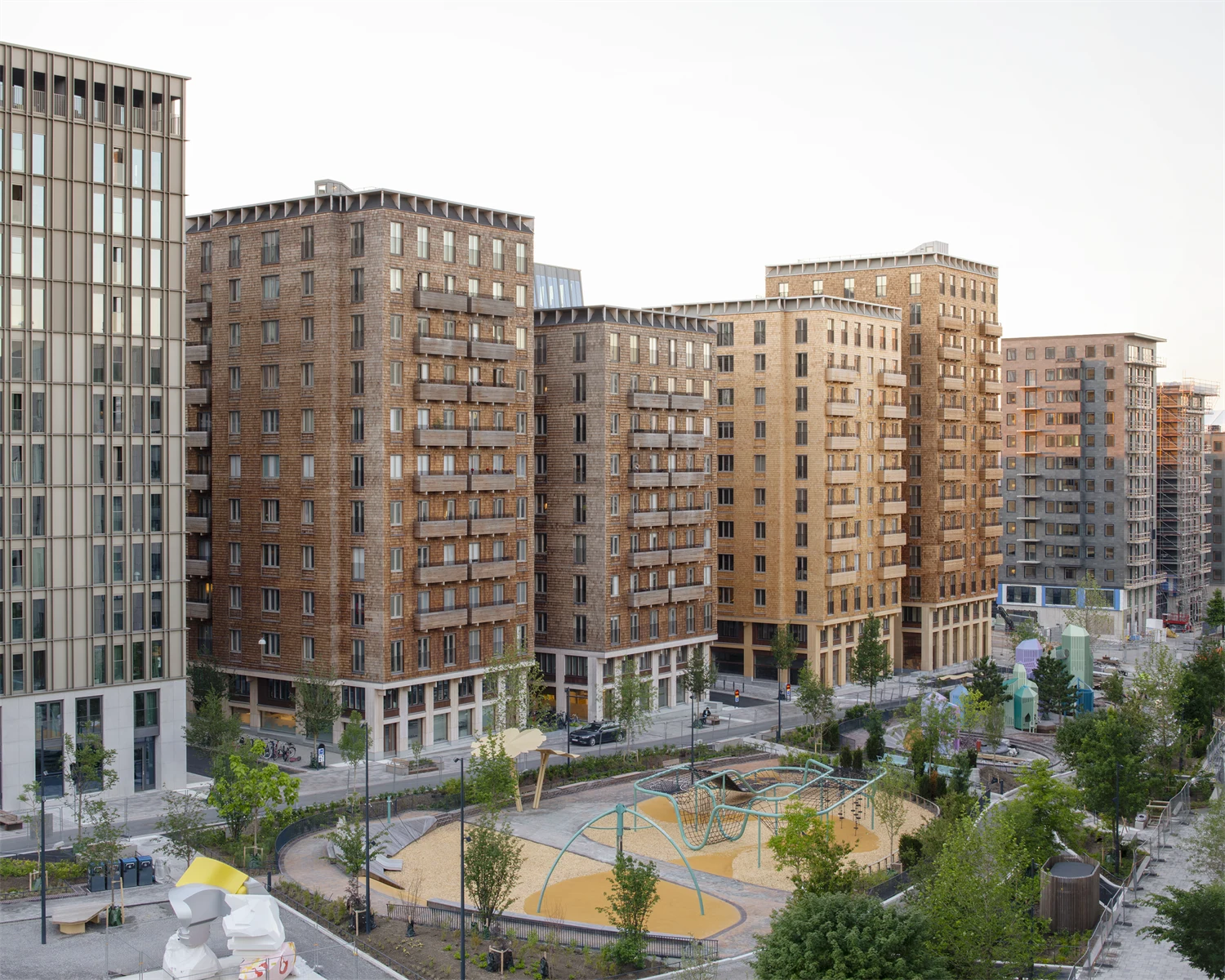
Today, after hundreds of completed homes and several high-profile projects, wood construction is no longer a vision for the future, but an established part of the company's business. According to Anna Ervast, COO at Folkhem, success is about daring to make a clear decision, building knowledge and sticking to the chosen direction.
"We understood the possibilities of wood construction long before there was a broad discussion in the industry. We saw the benefits in the construction process, the work environment and the customers' experience of living in a wooden building. At the same time, we realized even then that the construction sector has a major climate impact and that the transition needed to start somewhere," she says.
A decision that must be made from the start
An important lesson from Folkhem's journey is that wood cannot be treated as an alternative that is added at the end of a project.
In order to achieve economy and efficiency in the projects, the decision needs to be made right from the start, says Anna Ervast.
"If you want to succeed, you have to decide on wood in the first starting box. Then you can optimize the project based on the conditions. If you run parallel tracks and try to change materials later in the process, it will be both difficult and expensive."
She believes that many projects get stuck right there. Uncertainty leads to duplication of work and to contractors being expected to solve issues they have no experience with.
"We have chosen to be very clear about our direction. It creates security both internally and among our partners."
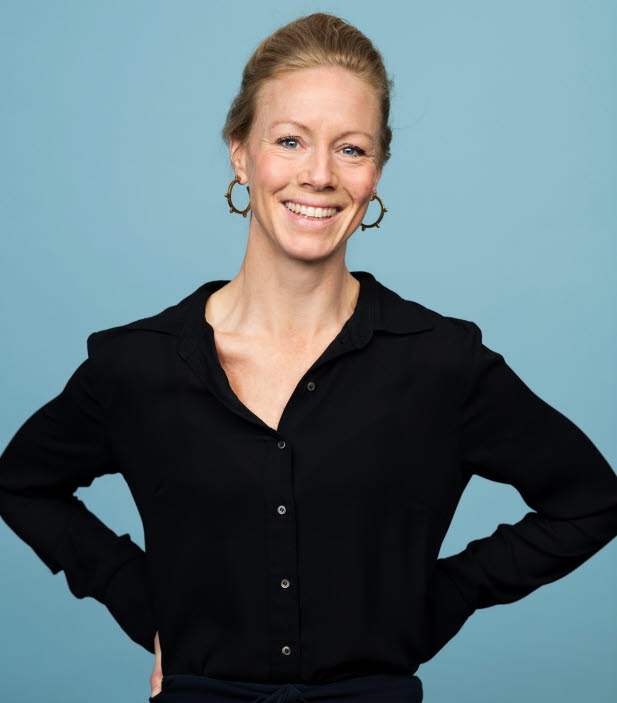
❞We are a commercial real estate company. We would not build our entire business on wood if it was not profitable.❞
Anna Ervast, Folkhem
Driving innovation in a conservative industry
At the same time, being early has meant challenges.
Property development and construction is an industry where standardized working methods and established solutions often dominate. Introducing new methods requires both patience and perseverance.
"We have had to raise the level of knowledge among many actors systematically and at the same time be prepared to question established working methods. These are actors who work in everything from financing and regulatory requirements to fire issues and insurance solutions."
A crucial success factor has been to build trust in the process and to dare to make decisions even when all the answers are not in place.
"Historically, you have had a long time to analyse all the risks before pressing the start button. But the world is changing faster today. We need to get better at working innovation-driven and developing solutions along the way."
Research gave confidence to lead the way
When Folkhem began to develop the acclaimed project Cederhusen in Stockholm, collaboration with the research community became a key.
Anna Ervast highlights the meeting with the designer – then a student at KTH Royal Institute of Technology – Frida Tjernberg Persson, as an example of how research and young talents can make a real difference.
"She had done a very solid degree project on tall wooden buildings. We saw the potential and immediately incorporated the knowledge into the project. It became important to dare to implement something that no one had done before in Stockholm."
Since then, Folkhem has been involved in a large number of research and development projects together with, among others, RISE, Swedish Wood and international partners.
The win is not just about new knowledge.
"The research gives us access to experts, but also credibility in the issues we pursue. At the same time, the research gets a connection to real projects and real challenges."
Knowledge grows when it is shared
Despite the fact that experience is often seen as a competitive advantage, Folkhem wants to actively share its lessons.
The background is simple, says Anna Ervast.
"If we say that we build in wood for climate reasons, but at the same time keep the knowledge to ourselves, it will not be credible. If we are to succeed in creating real change, wood construction needs to increase throughout the industry. We must move from individual projects and actors to daring to think about systemic change. This has been the case with all development."
She believes that development would be even faster if actors collaborated more on common challenges.
As an example, she highlights Denmark, where the results of fire tests are collected openly in a common knowledge bank, called BrandBank.
"Many people spend an incredible amount of time, money and effort on exactly the same things. If knowledge becomes more accessible, more people don't have to reinvent the wheel."
The myths that still slow down wood construction
Despite the development that has taken place, several persistent misconceptions remain.
The biggest one, according to Anna Ervast, is that it would be more expensive to build in wood than in concrete.
"It has become an established truth, but I think it is greatly simplified. We are a commercial real estate company. We would not build our entire business on large-scale wood construction if it was not profitable."
Another recurring myth is about complicated and costly measures of water damage.
"Our experience shows that damage during the construction period has often been easy to fix. I think we need to talk more about actual experiences and less about old beliefs."
The requirements for more people to choose wood
Anna Ervast sees several positive changes since Folkhem made its choice.
Knowledge has increased throughout the value chain, more reference projects are in place and more and more people have their own experiences of living or staying in wooden buildings.
At the same time, important steps remain before wood becomes an obvious option in every construction project.
"More people need to feel secure in the how, risk management and demand, and make the opportunity cost visible in the green transition. When that security exists, development will accelerate."
She also calls for clearer political instruments.
"Reducing emissions from the construction sector is a prerequisite if we are to achieve the climate goals. Opting out of concrete in favour of wood is a low-hanging fruit. We already know which materials and processes are responsible for large emissions. We must also dare to make demands and make decisions."
The construction of the future will not be developed by individual actors
If Anna Ervast can send one piece of advice to other property developers who are considering building in wood, it is short and clear:
"Collaborate with us."
Behind this call is a conviction that the construction of the future is not developed by individual actors, but by research, clients, suppliers and construction companies working together. Only then can wood become the obvious alternative that many already know it has the potential to be.