

Four billion packages every year
Everything about IKEA is big. And that goes for packaging as well. The company creates a staggering four billion packages annually and consumes over 900,000 tonnes of material to produce them.
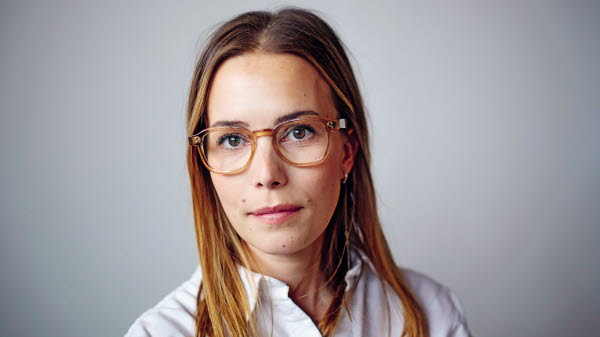
Maja Kjellberg, packaging development leader at IKEA in Älmhult, is responsible for leading and implementing their innovative and sustainable packaging solutions.
“I loved crafting stuff from paper when I was younger. My father has a background within the packaging industry, so the apple doesn’t fall far from the tree,” says Kjellberg.
Diverse workplace
She works in Älmhult where the first IKEA warehouse opened in 1958. Although the location is somewhat remote in the woods of Småland, she collaborates with colleagues from all over the world.
“It’s a diverse workplace with lots of people with different backgrounds and expertise. Within my team, there are five of us specialising in packaging. Around the world, there are about 100 working with packaging in one way or another.
Completely circular by 2030
In late November 2021, IKEA announced that they are moving away from using plastic in packaging. The amount needed to create consumer packs, such as bags for screws, fittings and other small products, is set to be reduced to zero by 2028. However, there will be some exceptions, according to Kjellberg. For example, a few products will be packaged with recycled or biobased plastic.
But by 2030, the goal is to make all packaging material completely circular. This means a lot of innovation will be required to leave all the plastic behind.
Discovering new materials
Maja Kjellberg explains the process behind this: “One part of this is looking over our current packaging solutions. The other is to look into new types of packages and materials. Measuring our total carbon footprint gives us a picture of what materials we need to reduce. Fortunately, we’re already very strong users of paper-based materials, over 91% of our packaging is already made from paper.”
Smarter packaging choices
The brown boxes, or flat packs as they’re also called, are key players on the journey towards becoming circular. However, the 8-9% of packaging that is plastic still represents a significant volume for IKEA. “Our goal is to make smarter choices in materials and packaging types. One of the biggest challenges is to do it cost efficiently, since we want our products to be affordable for as many customers as possible. There are already many exciting materials and solutions, but they must be affordable and have wide availability in different markets,” Kjellberg says.
Materials must be accessible
Another challenge is to find solutions suitable for the 60 markets IKEA is currently active in. They also need to consider various types of obligations that apply to the different markets. “The materials we choose must be accessible not only in the markets where we sell our products but also where we produce them.
Additionally, we need to follow different rules in different markets. In France, for instance, there’s a mandatory recycling label for different packaging materials. In other words, there is no harmonised standard for labelling that we can adhere to.”
Easy to get rid of
The future of sustainable packaging not only means that materials need to be recyclable, but also that consumers know how to dispose of them properly. Perception and intuitiveness therefore need to be considered. “We can’t control how customers recycle our packaging. I believe that it’s important to have a ‘what you see is what you get’ approach. What to do with the material has to be intuitive for the customer,” says Kjellberg.
She acknowledges that the goal is ambitious but believes that it’s necessary to aim high to achieve significant progress.
A gradual shift
Maja Kjellberg does not think that customers will notice any major changes on the store shelves as IKEA moves from plastic to paper.
“I don’t expect people will have any ‘aha’ moments, the shift will be gradual. But some products have already undergone a change. Many of our bed linens have a paper band wrapped around them instead of being packaged in a tight plastic bag. We have also got rid of blister packs for some of our light bulb ranges. Our on-pack communication, which shows the shape or pattern of the product, will probably also change, since some of the products will be slightly covered,” explains Kjellberg.
Taking pride in the goals
There’s still much work to be done, but she is optimistic about achieving the goals they’ve been set.
“It’s a joy to work on this, and I’m really proud of what we have achieved, even though we haven’t reached our goals yet. A lot of time and energy has been invested by many colleagues at IKEA, and it’s an honour to present this project and commitment.”
This is an excerpt from the article "Helping IKEA leave plastic behind", which was printed in our magazine PAPER #7.