

In a bid to reduce unnecessary plastic waste and lower its carbon footprint, Bama has taken bold steps toward a more sustainable future. One of the most significant strides has been the development of effective, eco-friendly packaging solutions. But how easy was the transition?
We spoke to Øyvind Briså, Company Director at Bama, and Erik Hanseid, Director of Bama Packaging. Here are their top five tips for making the shift from plastic to paperboard.
Five steps to more sustainable packaging
1. Do your research
For Bama, the first step in moving away from plastic was to explore the materials already available. They needed to focus on finding modern and smart packaging that met the strict requirements necessary for goods, logistics and consumers.
“This meant working actively with the design and development of the entire value chain to test for different types of alternatives. As fruits and vegetables contain so much water, they can be fragile and sensitive to package. Through research, we found that not only had the quality of other materials improved, but that paperboard actually worked better than plastic”, says Erik Hanseid.
“Through research, we found that not only had the quality of other materials improved, but that paperboard actually worked better than plastic”
2. Look at the bigger picture
It was essential to Bama that their decision to ditch plastic didn’t lead to other environmental drawbacks. For example, they noticed that removing plastic from certain products increased waste and worsened other aspects of their carbon footprint. In some cases, keeping plastic was actually the most environmentally sound option.
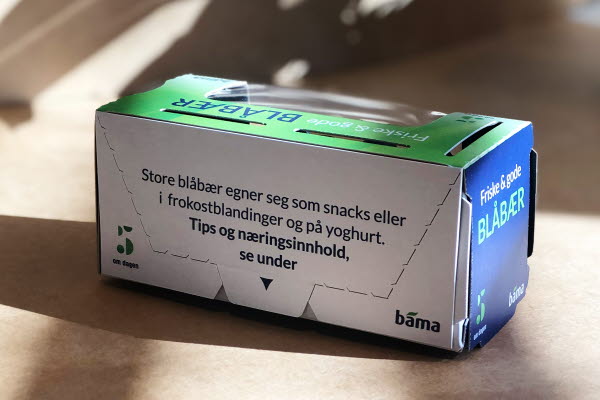
On the other hand, when they changed the packaging for their blueberries, the first Bama product to switch to paperboard, the benefits extended beyond the container itself.
“We have reduced the number of truck transports throughout Europe every season by approximately one hundred since we can fit more packages into each carrier. By moving from plastic to paperboard, we have reduced the total climate footprint by 48.2 per cent and over 308 tonnes of plastic.”, says Øyvind Briså.
“By moving from plastic to paperboard, we have reduced the total climate footprint by 48.2 per cent and over 308 tonnes of plastic.”
3. Have your finger on the pulse
In addition to being renewable and biodegradable, the new packaging needed to perform at least as well as plastic. Bama worked, and continues to work, with leading university researchers to develop systems that support improvements and documentation.
“We are working actively with the design and development of the entire value chain and are testing different types of solutions. We are therefore working with leading researchers at universities to develop systems that help us with information for improvements and documentation.”, says Erik Hanseid.
4. Take it one step at a time
Although both Bama and their consumers are eager for more sustainable options, the transition can’t always move as quickly as they’d like. While consumers clearly want less plastic, Bama can’t simply adopt the first alternative that appears. The change has to come gradually, after careful consideration.
“It is important for us that our choices are not only emotional, but are also based on scientific grounds when it comes to things like carbon dioxide emissions, food waste and logistics. We don’t have a central location where everything is packaged. We purchase fruit from 200 suppliers in 80 countries, so the transition must be gradual and long-term. We are at the forefront of this transition in Scandinavia and can therefore be a good partner for those suppliers who haven’t come as far.”, says Erik Hanseid.
5. Find your tribe
Another key to Bama’s long-term environmental goals is working with like-minded partners. That’s why Bama only work with packaging suppliers who share their vision of a more sustainable future.
“Holmen makes very high-quality paperboard. It has long, fresh fibres with good solidity for the berries, along with hygienic surfaces. It is crucial for us that Holmen works sustainably with its entire production, from planting to manufacturing. They have knowledge and experience and in many cases are world-leading in their field”, says Erik Hanseid.
Text: Jonathan Leijonberg in Inspire Magazine #63